
Insight
Poles Apart, Same Playbook
Trump, Burnham and the Art of Being Heard
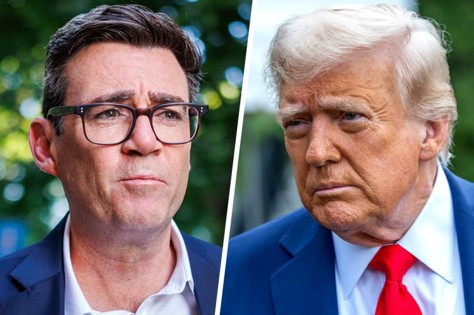
Donald Trump and Andy Burnham are politically poles apart. Yet the two leaders have one thing in common: they’re both formidable communicators.
Their styles couldn’t be more different, but they share several techniques business leaders can learn from. And a few they definitely should not. More on that later.
Plain language
- Trump & Burnham: Neither sounds like he’s reading a script. Trump uses short words and sentences with a vocabulary most listeners can instantly grasp.
Linguists have repeatedly noted that Trump speaks at a lower reading level than most politicians, which makes him easy to follow and quote. Burnham’s northern accent and plain speaking make him sound like the people he represents, not a Westminster insider. - Business leaders: Ditch the corporate script. Conversational language builds more trust than polished jargon. If it sounds like it was written by a committee, people assume it was.
Relentless repetition
- Trump & Burnham: “Make America Great Again”, “Drain the swamp”, “Build the wall”. Trump repeats short slogans until they stick. Burnham relies less on catchphrases and more on consistency. For years, he has returned to the same themes: power to the regions, fairness for ordinary people, fixing a broken economy, and more public control of key services.
- Business leaders: Audiences need to hear a message many times before it sinks in, usually long after you’re sick of saying it. Keep your core points the same, but refresh how you make them with new stories, data and examples.
Authenticity (or the perception of it)
- Trump & Burnham: Both are seen as saying what they think. With Trump, what you see is what you get, whatever you think of that. Burnham’s authenticity is built on almost opposite foundations: empathy and roots rather than showmanship and defiance.
- Business leaders: Be recognisably yourself. A consistent personality across speeches, interviews and social media makes a leader feel real. Jensen Huang, Richard Branson and Tony Fernandes all do this well. Audiences quickly notice when someone is playing a role.
Conviction
- Trump & Burnham: Trump rarely hedges, which projects strength to his supporters. Burnham stands up for his patch and stays calm under pressure, which makes him credible.
- Business leaders: Hedging every sentence signals that you don’t believe your own message. Say clearly what you stand for. But conviction isn’t pretending to know everything. When you don’t know, say so, and say when you’ll find out.
Connection
- Trump & Burnham: Both speak as the voice of a particular group, and both also use an us-versus-them frame. For Trump, it’s ordinary Americans against the establishment and the media. For Burnham, it’s the North and regions against London and Westminster.
- Business leaders: Show you understand your audience’s concerns before explaining your position. If you need a common enemy, make it a problem, such as waste or rising costs – not a group of people.
Visibility
- Trump & Burnham: Both dominate the conversation by being highly visible, using media moments well and making themselves part of the story. Their commonality is visibility, not style.
- Business leaders: Leaders who only appear in a crisis are judged on their worst moments. Regular presence builds public trust in advance.
Emotion
- Trump & Burnham: Burnham displays empathy, most notably in his long campaign for families of victims of the Hillsborough disaster. In his first Labour conference speech as Prime Minister, he fought back tears talking about his late father, Roy, then tied his grief to a pledge to create a free National Care Service. The BBC counted 11 standing ovations. Trump’s register is anger and grievance: he tells supporters he feels what they feel and is fighting for them.
- Business leaders: Let some emotion through. Genuine care, frustration or pride is more persuasive than a flat, measured tone. Just make sure it suits the moment, and that it’s about the people you serve, not about you.
Where to draw the line
Both men draw plenty of criticism. Fact-checkers have repeatedly challenged many of Trump’s claims, and critics call his style divisive. Burnham’s opponents accuse him of making big promises that depend on money he may not have.
For business leaders, accuracy is non-negotiable. Regulators, investors, journalists and employees will check what you say and remember it. One exposed falsehood can undo years of credibility. Unlike a political base, customers and staff rarely reward a leader who won’t own up to an obvious mistake.
In short: borrow their plain language, conviction, consistency and humanity. Leave behind anything that trades accuracy, accountability or restraint for attention.